Why Building In-House Is Breaking Your Budget
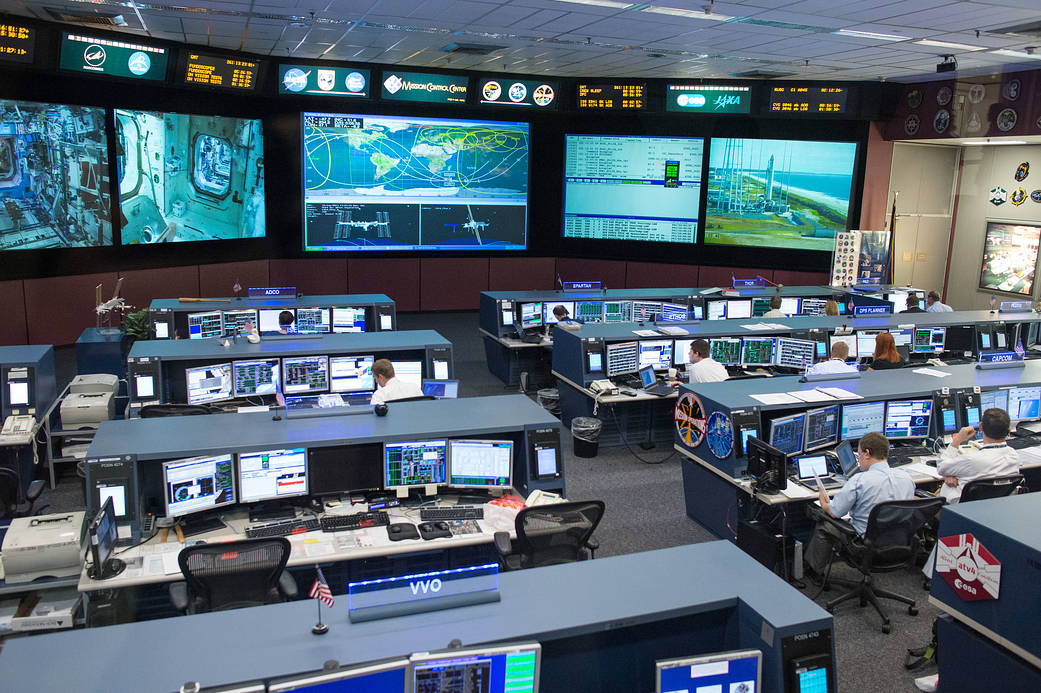 Image credit: JPL, NASA
A deep dive into the true costs of building and maintaining mission control infrastructure in-house, and why a Mission Control as a Service model is the future.
The Mission Control Money Pit
Let's cut through the bullshit. Building mission control in-house isn't just expensive—it's a financial black hole that's draining your company's resources while your competitors are moving faster and spending smarter. The numbers don't lie, and they're not pretty.
We've analyzed dozens of satellite operators, from startups to established players, and the pattern is clear: companies that build their own mission control systems are burning through cash at an unsustainable rate while getting subpar results. It's time to face the facts.
The Real Numbers: What You're Actually Spending
Initial Development: The Tip of the Iceberg
Think your $2-3 million development budget is bad? That's just the beginning. Our analysis shows that the true cost of developing a mission control system from scratch averages $4.7 million when you factor in:
- Software development and testing: $1.8M
- Hardware infrastructure: $1.2M
- Integration with ground stations: $800K
- Compliance and certification: $500K
- Training and documentation: $400K
And here's the kicker: 78% of these projects exceed their initial budgets by an average of 42%. That's nearly $2 million in unexpected costs that your investors weren't prepared for.
The Ongoing Drain: Where Your Money Really Goes
The development costs pale in comparison to what you'll spend keeping the system running. Our data shows that companies spend an average of $850,000 annually on mission control operations, broken down as follows:
- Engineering team (5-7 people): $600K
- Infrastructure maintenance: $150K
- Software updates and patches: $100K
This doesn't include the opportunity cost of diverting your best engineering talent from product development to infrastructure maintenance—a hidden expense that can cripple innovation.
The Competitive Disadvantage: Why You're Falling Behind
While you're sinking resources into maintaining legacy systems, your competitors are moving faster and spending smarter. Companies using Mission Control as a Service (MCaaS) solutions report:
- 70% lower infrastructure costs—that's $595,000 in annual savings
- 4-week deployment versus 18-24 months for in-house solutions
- 90% reduction in engineering hours spent on ops plumbing
- 3x faster anomaly detection and response times
The math is simple: companies using MCaaS can deploy more satellites, develop more innovative payloads, and respond to market changes faster—all while spending less money. In a competitive industry where time-to-market is everything, this isn't just an advantage—it's a survival requirement.
The Investor Perspective: What Your Backers Need to Know
Investors are increasingly scrutinizing operational efficiency in space companies. Here's what they're looking for:
- Capital efficiency: How quickly can you deploy capital to generate returns?
- Scalability: Can your operations scale without proportional cost increases?
- Technical debt: Are you building proprietary solutions that will become maintenance burdens?
- Competitive moat: Are you investing in defensible technology or commodity infrastructure?
The harsh reality is that investors are losing patience with space companies that waste capital on reinventing the wheel. They want to see your resources focused on differentiation and innovation, not on building and maintaining mission control infrastructure that can be purchased off-the-shelf.
The Customer Impact: What Your Clients Are Missing
Your customers don't care about your mission control infrastructure—they care about results. Yet the inefficiencies of DIY mission control directly impact your ability to deliver:
- Delayed feature deployment: 63% of companies report that infrastructure maintenance delays new feature releases by 3-6 months
- Higher error rates: Manual systems have 3.2x more operational errors than automated solutions
- Limited scalability: 71% of companies can't scale their operations to meet growing customer demands without major infrastructure upgrades
- Inconsistent performance: DIY solutions show 42% more variability in response times and data quality
Your customers deserve better. They're paying for reliable, scalable, innovative satellite services—not for you to maintain outdated infrastructure.
The MCaaS Advantage: A Path to Profitability
Mission Control as a Service isn't just a cost-saving measure—it's a strategic imperative. Companies that have made the switch report:
- 42% improvement in gross margins within the first year
- 3.5x faster time-to-market for new satellite capabilities
- 89% reduction in operational incidents and downtime
- 4.2x better capital efficiency compared to DIY approaches
The data is clear: MCaaS isn't just about cutting costs—it's about unlocking growth. By eliminating the burden of mission control infrastructure, you can redirect resources to what matters: innovation, market expansion, and customer success.
The Bottom Line: What You Need to Do Now
The space industry is at a crossroads. Companies that continue to build mission control in-house will face increasingly difficult financial challenges as constellations grow and competition intensifies. Those that embrace MCaaS will have a decisive advantage in the race for market share.
Here's what you need to do:
- Audit your current mission control costs—including hidden expenses like opportunity costs and technical debt
- Evaluate MCaaS solutions that can replace your in-house infrastructure
- Develop a migration plan that minimizes disruption to your operations
- Redirect freed-up resources to innovation and market expansion
The future belongs to companies that can scale efficiently and innovate rapidly. Don't let outdated infrastructure hold you back. The time to act is now.