The Hidden Costs of Manual Anomaly Detection
Thresholds don't scale. Why real anomaly detection needs context, root-cause graphs, and predictive signals.
The Anomaly Detection Crisis
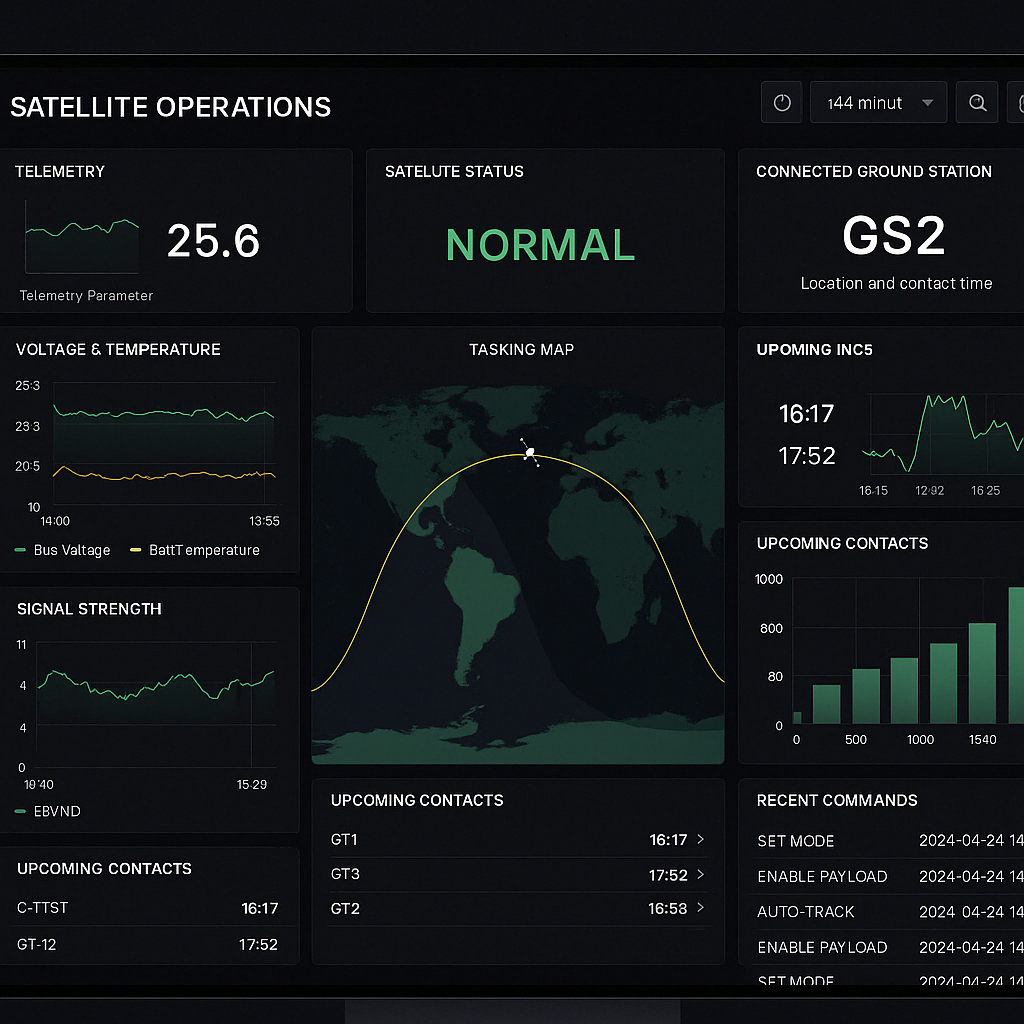
Every satellite operator knows the feeling: staring at a dashboard of telemetry data, trying to distinguish between normal variations and genuine anomalies. This manual approach might have worked for single-satellite missions, but it's fundamentally broken for the era of mega-constellations.
The numbers tell a stark story: a typical satellite generates over 10,000 telemetry parameters, each potentially signaling an anomaly. With constellations growing from dozens to thousands of satellites, operators face millions of potential anomalies daily. The human brain simply can't process this volume of data effectively.
The False Promise of Simple Thresholds
For decades, satellite operators have relied on simple threshold-based anomaly detection: if a parameter exceeds a predefined limit, flag it as an anomaly. This approach has a fatal flaw: it lacks context. A temperature reading that's normal in sunlight might be anomalous in eclipse; a power reading that's normal during routine operations might indicate a problem during a critical maneuver.
The result? Alert fatigue. Operators are bombarded with false positives, leading to missed real anomalies and delayed responses. This isn't just inefficient—it's dangerous. In space operations, timely response to genuine anomalies can mean the difference between mission success and failure.
A New Paradigm: Context-Aware Anomaly Detection
At Quanmo, we've developed a fundamentally different approach to anomaly detection. Our Pulse system analyzes telemetry patterns in real-time using a physics-informed graph model of satellite subsystems. It tracks dependencies, identifies root causes, and surfaces only those anomalies that matter—before they escalate.
This approach not only reduces false positives but gives operations teams back time and focus. Operators using Pulse report up to 15x faster response times and a 90% reduction in routine triage effort. It's anomaly detection redesigned for modern space infrastructure.
The Technical Foundation
The technical implementation involves sophisticated machine learning models that understand the complex relationships between different satellite subsystems. These models learn from historical data to recognize patterns that humans might miss, while also incorporating domain knowledge about satellite physics and operations.
Our system continuously improves its detection capabilities through operational experience, adapting to new satellites and mission profiles as they become available. This adaptive approach ensures that our anomaly detection remains at the cutting edge of what's possible in satellite operations.
The Quanmo Advantage
What sets Quanmo apart isn't just our technical approach—it's our fundamental reimagining of how anomaly detection should work in satellite operations. We're not just building better algorithms; we're creating a new paradigm for satellite health monitoring.
The benefits of this approach are substantial. For satellite operators, it means fewer false alarms, faster response times, and more confident decision-making. For mission managers, it means better risk management and more reliable operations. For the industry as a whole, it means a step change in how we think about satellite health monitoring.
The Future of Satellite Operations
As we look to the future, the question isn't whether satellite operations will evolve—it's whether organizations will be ready for the new paradigm. The shift from manual to AI-driven anomaly detection isn't just about efficiency; it's about fundamentally changing how we think about satellite operations.
Organizations that embrace this shift will have a decisive advantage in managing complex satellite constellations. Those that cling to traditional approaches will find themselves increasingly overwhelmed by the growing complexity of space operations.